
In medtech, clinical adoption speed separates winners from the pack. HyIvy Health has the type of traction a Series B company would be jealous of.
So while the venture market has been slow to understand how massive a market women’s health is, there is a huge unmet need that Rachel and team have hit on. And in the coming years, what they’ve built will be in the hands of thousands of patients.
This interview took place in January 2026 with HyIvy Health founder and CEO Rachel Bartholomew.
Q: Why are doctors so excited about Hyivy?
Rachel Bartholomew:
Pelvic pain is notoriously tough to treat, and until now, doctors have had no good tools. That’s why we have over 300 hospitals and clinics representing over 200,000 patients on our waitlist. Many actually reached out to me, hoping to get the device. They’re tired of referring patients out to expensive imaging or specialists, they’re losing time and money, often not even solving the problem.
We’re just weeks away from our expected FDA clearance, and I’m so excited to get this into the hands of these doctors and their patients.
Q: So what is HyIvy’s device?
Rachel Bartholomew:
Our device is the treatment I wish I had as a former cancer patient. Because until now the best medicine has to offer is a glass tube. And considering 1 in 6 women, and 1 in 10 men, will deal with pelvic pain in their lifetime, that’s just not ok.
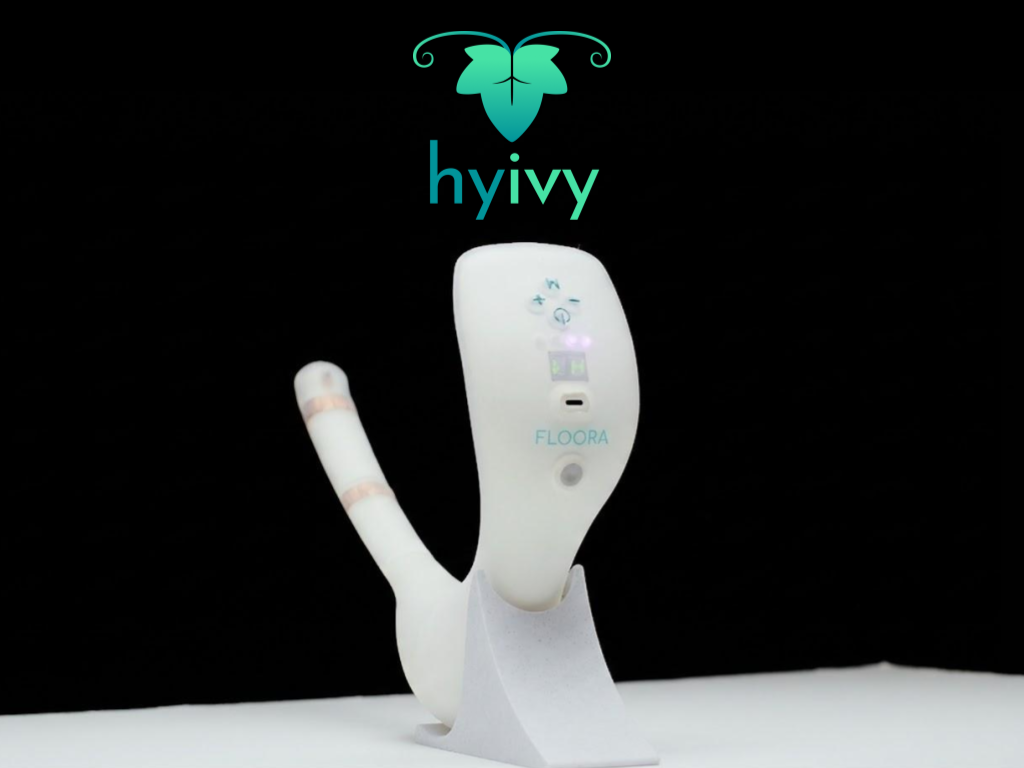
This is the Floora. It’s an at-home device that provides precision dilation and heat therapy, paired with multiple integrated sensors.
The device is 4 years in the making. We have 12 patents granted and filed that cover all of our therapeutic and diagnostic uses, and both female and male form factors.
Q: Which patients need this?
Rachel Bartholomew:
This has been built for millions of women and men who are dealing with chronic pelvic pain.
This pain is a symptom of 75 different conditions, which range from cancer to painful sex, endometriosis to bladder conditions, and even menopause. And the Floora is the first tool that can reliably help them all.
Q: Does it work?
Rachel Bartholomew:
In the last 1-2 years, we’ve had over 150 patients use the Floora. These are from our initial usability studies, as well as 5 different clinical trials we have ongoing for conditions like oncology and endometriosis.
Medically, all patients are benefiting. All of them. The challenge of pain has always been subjectivity. What’s amazing is our real-time biosensor data matches patient self-reported pain, so we know there’s an objective measurement we’re uncovering.
And adherence is incredibly high – 70% better than the standard of care.
But it’s the anecdotal feedback from patients I love the most. Patients love it. They’re incorporating it into their daily life. They’ve even given their Floora names. And at the end of the study, they don’t want to give it back.
Q: How do you keep patients, doctors, and payers all happy at once?
Rachel Bartholomew:
We built a model that benefits everyone. Patients get devices they actually enjoy using at home with no out-of-pocket cost. We slot into existing insurance reimbursement codes for monthly remote therapeutic monitoring.
The revenue is shared with clinics who turn a resource intensive case into a new revenue stream. Finally, payers love us because we prevent the cycle of expensive ER visits, scans, and specialist referrals caused by untreated, chronic pain.
Q: There’s a ton of data coming from this device. What’s it for?
Rachel Bartholomew:
We’re creating data at a scale never before seen in pelvic and women’s health. Within 1-2 years of being on the market we’ll have the largest data set in the world on pelvic health.
With readouts on hormone levels, inflammation, cortisol, and more on a daily basis – the Floora will become a front-line diagnostic and clinical decision-making tool for women’s health, even beyond pelvic pain.