
In the next year, you’ll see changes to the electronics you use everyday. Your TV remote will never need the battery replaced. It’ll self-charge off ambient light. Turn your phone over, it’ll trickle charge off indirect light. Your biometric watch will never need to be plugged in. And then by next year, you’ll see these panels on the exterior facades of buildings. In about five years, they’ll be incorporated into solar farms.
All of this is enabled by the field of perovskite chemistry. Please meet California Perovskite Technology (CPTI).
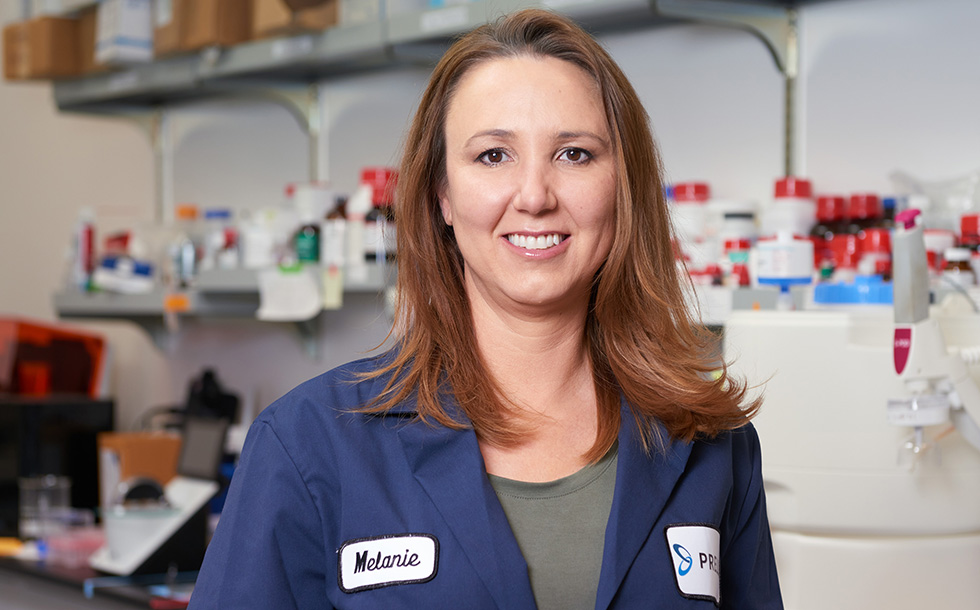
This interview took place in January 2026 with co-founders Vivian Qu (CEO & second time founder) and Josh Douglas (COO).

Q. Simply, what is different about perovskite photovoltaics than silicon photovoltaics?
Vivian Qu:
Perovskite isn’t an element, like silicon. It’s a class of chemistry defined by its crystal structure.
Within crystalline perovskite, electrons become excited at a far lower energy threshold. So while silicon needs direct sunlight to exceed its excitation threshold and produce electricity, perovskites produce electricity from shade, low angles, indoor light, and direct sun – across the visible spectrum.
They’re extremely thin – they’re a nanomaterial – lightweight, and half the price to make than silicon today.
Q. Most people thought perovskites would hit commercial markets in five years. Why, all of a sudden, are there a bunch of you in market, today?
Josh Douglas:
Short answer: the explosion of AI compute at the edge. Small compressed algorithms that are onboard robots, sensors, and all manner of electronics. These all need juice, they need extra power. These are being developed and designed, now.
At robotics conferences, IoT conferences, the demand for what we’re doing is very real.
Vivian Qu:
To serve that demand, CPTI has the best power density to surface area ratio in the world.
This means, for, say, a Boston Dynamics Spot robot, working a mission outdoors, we can extend the run time by up to 50%.
Q. Why won’t China beat you?
Vivian Qu:
Well, first of all, our current production line is also in China. And we already have the lowest COGS of any competitor.
We have a big lead, due to our processing advantage.
Josh Douglas:
Second, it’s important to understand that perovskites are already cheap. Instead, it’s performance that matters, across multiple metrics.
Lastly, we’ve met our Chinese competitors, face-to-face. Our performance is substantially higher. And they know it.
Q. As a second time founder, what did you learn from your time at Tidal Vision and how is that shaping how you build CPTI?
Vivian Qu:
We sold my first company to Tidal Vision in 2021 and I developed their nanomaterial products.
Tidal Vision succeeded because of a clear philosophy. Yes, they extracted chitosan, and yes, it is an amazing biomaterial. But the material itself is not a product. Tidal Vision focused on making superior products that the customer didn’t have to compromise on.
At CPTI, we have that same philosophy. We start with a world-record-setting perovskite chemistry. But CPTI is a solutions provider. We create turn-key solutions, including custom power-electronics modules, for our customers.
Q. What are your first products?
Josh Douglas:
Our first power systems shipped recently, embedded into a rugged field tablet used by workers ranging from Starbucks baristas to construction site managers.
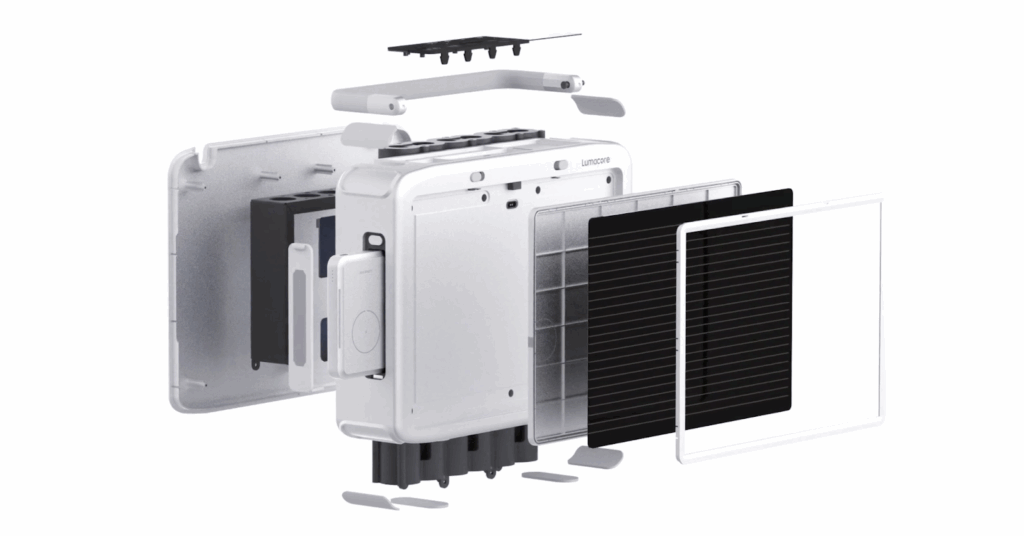
In consumer electronics, this unique self-charging power station demonstrates the performance benefits of redesigning both the power board and the light harvesting together.
In just the next few weeks, we’ll be applied to exterior facades of office buildings, proving that energy skins will be a given for buildings around the world, from sunny Mexico City to northern Helsinki.
Q. Are they durable enough for outdoor use?
Vivian Qu:
Yes. These have stability for 15 years. People are surprised. Most of our competitors are under 10 years old.
Q. Are your materials designed with AI?
Vivian Qu:
Yes our perovskites are designed with AI, but our AlphaGlass power systems are 7 or more additional integrated layers, engineered for performance and reliability.
Many variables matter here. Weight, surface area, and even speed — we can design and get prototypes in hand in 2 weeks.
One of the features of our platform – that large customers really like – is that our system scales from microwatts to kilowatts, with the same component stack. It’s more power, delivered anywhere, with less complexity, less wiring, less cost.