
Animal feed is one of the largest markets in our economy, it’s a $600 billion dollar industry. And there’s not a farmer on Earth who doesn’t want to improve their economics by lowering the cost of feed.
At IndieBio the last few years, we’ve had great performance from our investments in the animal-ag sector. We expect this next company, Gilly, to do every bit as well.
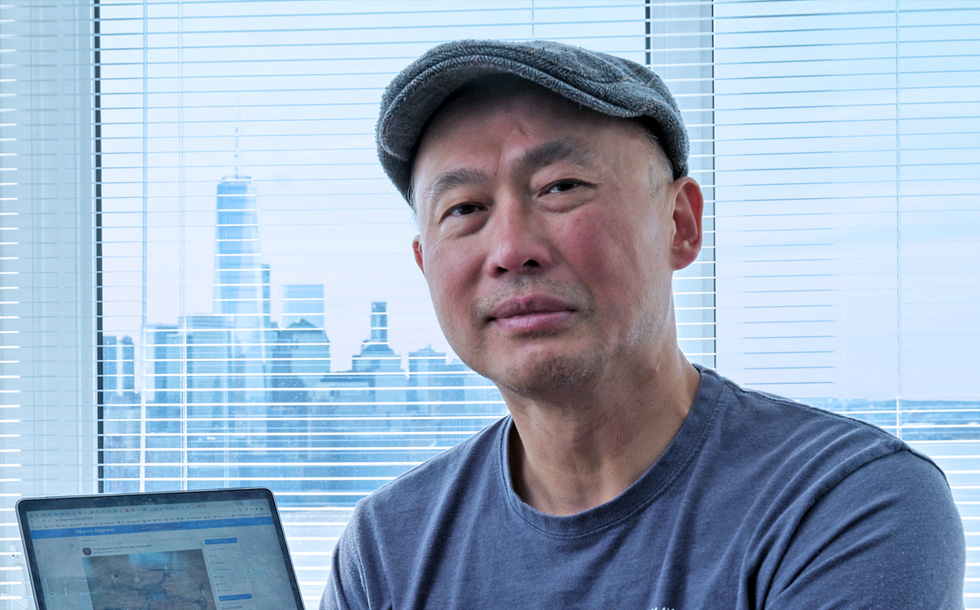
This interview took place in January 2026 with Gilly co-founders Bo Xu, PhD (CEO) and Vincent Wu, PhD (CTO).
Q: Can you tell us about your first pilot?
Bo Xu:
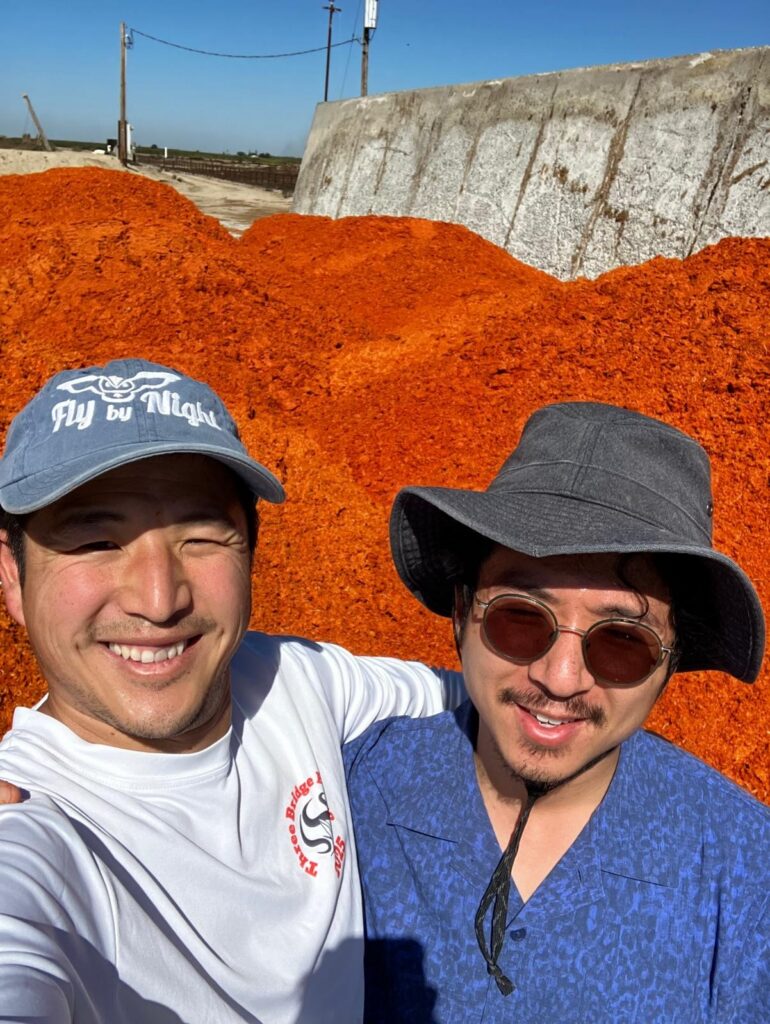
We completed our first feed-out on January 21st at Trinkler Dairy in Modesto, California, for a pen of 130 cows. This herd was eating all day and all night for two weeks. It was a great success.
We were proving palatability, which is important, because of course, your feed has to be nutritionally optimal, but it won’t be a successful product unless every cow enjoys it and eats 24 kilos a day.

Q: What is in your feed?
Vincent Wu, PhD, Co-Founder and CTO:
So, we start with crop byproducts, like the hulls of soybeans. These are already used in animal feed, as a bulking agent, but they’re incredibly low-value and not very nutritious.
These feedstocks have a value of around $40 to $100 a ton. In a 3-day transformation process, we will double their market price. We do this by improving their nutritional quality, especially protein content.
If the feedstocks start at, say, 15% crude protein content, in 3 days, we make that 23%.
Like any feed ingredient, our ingredient isn’t a complete feed. It’s a component that’s blended in, and in doing so, it saves farmers a lot on other expensive ingredients.
Q: How do you transform the feedstock so much, so fast?
Bo Xu:
In our lab at IndieBio, we are breeding powerful strains of fast-growing fungi specialized to our feedstocks. To be clear, this is non-GMO, and it’s a species already used in food. It’s full of umami and very tasty.
We use high-speed breeding to develop fungi that are incredibly fast at substrate transformation while also modulating and tolerating changing growing conditions, such as pH and temperature shifts of solid-state fermentation.
Q: Why is this a deep tech challenge?
Bo Xu:
Most people understand that the plants we eat – vegetables, grains – are full of nutrients. But they also have a lot of what’s called “anti-nutrients.”
People don’t talk enough about anti-nutrients, which hinder nutrient absorption, digestion, and utilization. Compounds like tannins, lectins, phytates, and saponins.
We’re breeding our strains to be great at breaking down these anti-nutrients, to improve the feed conversion ratio.
Q: What feedstocks can you upgrade?
Bo Xu:
I mentioned the hulls of soybeans earlier. Also, coproducts of corn ethanol production, such as distillers’ grain. And almond hulls – not the shells, but the flesh outside the shell.
In California, there’s a huge amount of tomato skins and seeds leftover from canning, called tomato pomace, and that’s what we upgraded at Trinkler Dairy.

The full list of feedstocks we can work with is vast, totaling many millions of tons of biomass across the US.
Q: What is your business model?
Bo Xu:
Initially, we will colocate with farmers and their animals on farms, such as California dairies, they already have infrastructure, equipment, and even feedstocks to enable us to run our process. The scale for just one farm is surprisingly large – as much as 20,000 tons a year.
But at even bigger scale, we’ll colocate with centralized feedstock suppliers. This gives us access to bulk feedstock at low cost while improving logistics efficiency, enabling us to scale to hundreds of thousands of tons.
Q: Commodity feed is a massive volume market. How much capital do you need to get to profitability?
Bo Xu:
We will be profitable on our first facility, and it will cost us less than $100,000 in total capital expenditures. Each module will generate $1.3 million dollars in revenue, converting 20,000 tons of feedstock per year.
Q: Why are farmers excited to pilot with you?
Bo Xu:
We can save farmers 5-10% on feed costs, which is their most significant input.
We achieve this while maintaining all their nutritional targets and staying just as tasty, if not more, to the animals. On a per cow basis, this equates to saving a farmer 50 cents per cow per day while we earn 50 cents per cow per day in revenue.
It’s a win-win-win for our business, the farmers, and the animals.