
In the United States alone, an estimated $40 billion is spent every year to protect and restore coastlines, with the average beachfront resort spending one to two million every year. It’s a giant market that we’ve always been attracted to – because the current solutions like concrete seawalls don’t help marine life thrive, in fact they only harm it.
After years of looking for the single best company in the world to take advantage of this market, we’ve found it. Reefstarter.
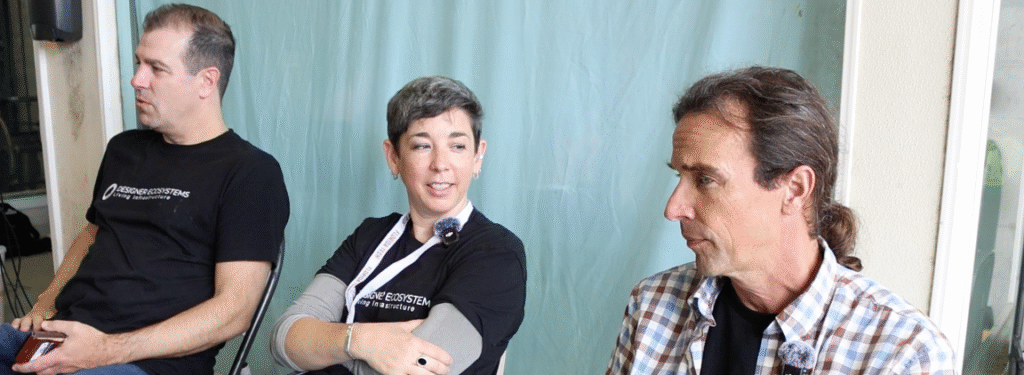
This interview took place in January 2026 with co-founders Bridget Baumgartner (CEO), Robert J. Weaver (CTO and Professor of Ocean Engineering at the Florida Institute of Technology), and Peter Miraglia (COO).
Q: What’s ReefStarter doing?
Bridget Baumgartner:
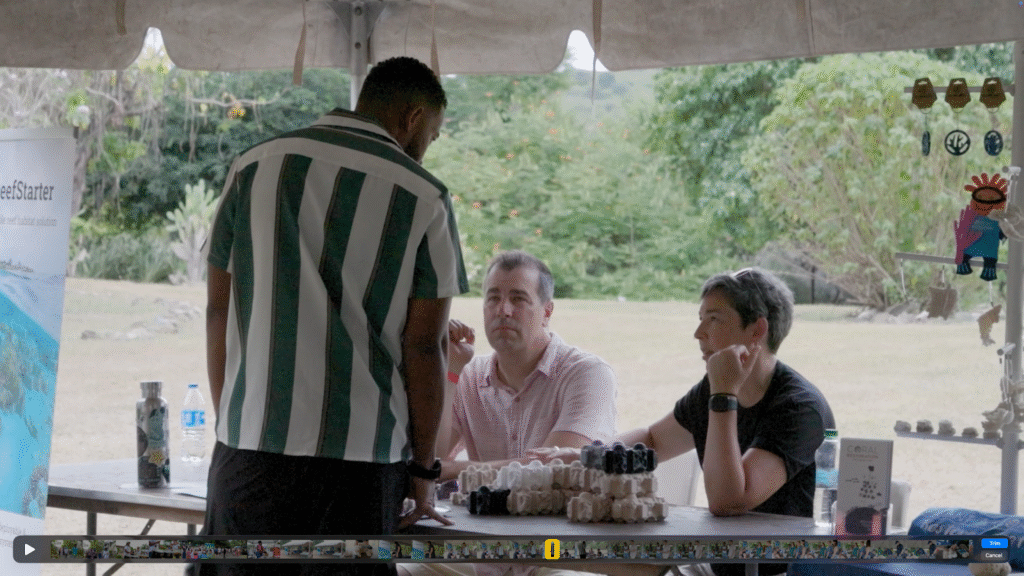
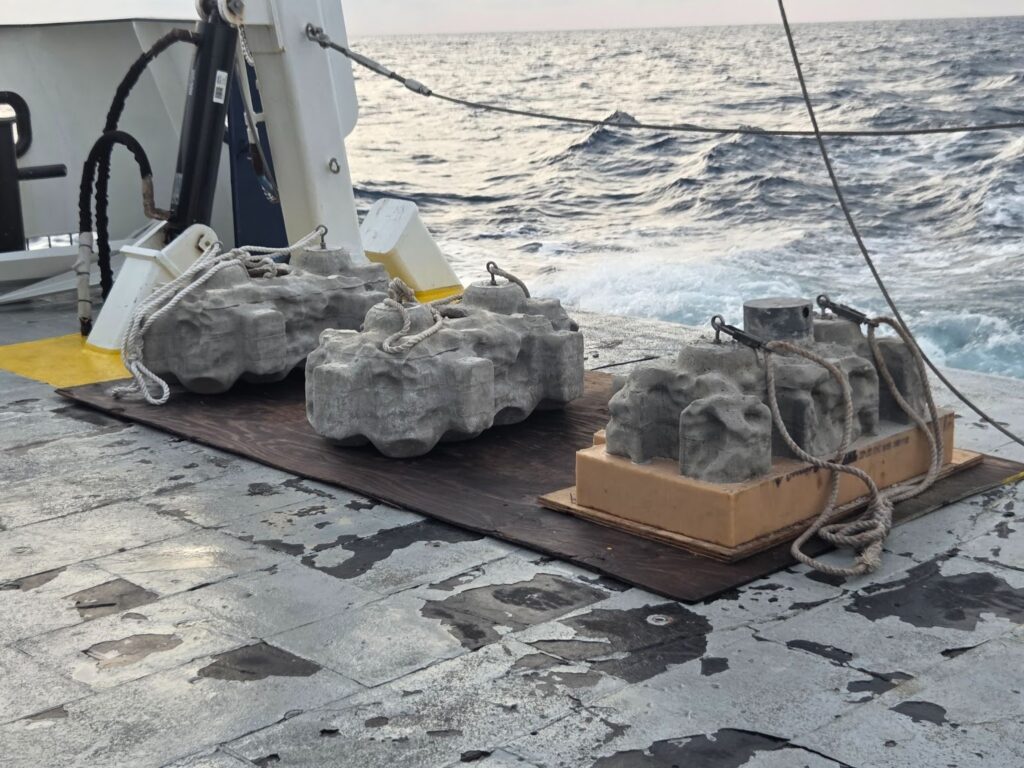
We are building our first reefs for a luxury Caribbean resort this spring. Offsite, we’ll pour concrete into our custom designed molds, and then on a barge we’ll lower the blocks into the water in a specific arrangement.
It may look like heavy legos, but they’re engineered to create complex hydrodynamics. They defuse the impact of daily wave action and once-in-a-generation storms, so that the beach doesn’t disappear off the continental shelf.
Robert J. Weaver:
And water and nutrients circulate around the superstructures so that marine life comes racing back.
Bridget Baumgartner:
It’s real revenue – for each resort, it’s about $3 million.
Q. Do you have a lot of customers?
Bridget Baumgartner:
We’ve got a $15M pipeline of pilot projects and we’re working on permits with the US Army Corps of Engineers right now.
These are resorts that are spending between $1 million and $2 million every year just to haul in sand and maintain their Insta-ready beach.
This isn’t even a permanent fix to their annual erosion.
The pain is acute and quantifiable. Spending the money is already budgeted for.
Resorts want us because they can charge more and book more guests with on-site amenities like vibrant snorkeling.
Q: Why is this technically challenging?
Bridget Baumgartner:
Every meter of shoreline is a one-of-a-kind and dynamic place. Our system is modular, so it’s both scalable and customizable.
Robert’s got decades of experience modeling and engineering coastlines.
Robert J. Weaver:
Combining local bathymetry and topography with dynamic modeling, our technology generates bespoke reef designs that are unique to the wave action at each . . . specific . . . property.
Q: How come seawalls or other hardening measures don’t work?
Bridget Baumgartner:
While seawalls can effectively protect property from wave energy damage, they destroy the beach and local marine life. This leads to unhealthy shores and coastal waters. This, in turn, kills businesses.
Property owners have to choose between a seawall or a nice beach, but they can’t have both.
Q. Tell us about the reefs that form?
Bridget Baumgartner:
In open water tank tests, our one third scale modules attracted fish, algae, urchin, coral, even lobsters – a necessary mix of critters to sustain a healthy reef.
Q. Does this take years to build?
Peter Miraglia:
No. The customer wants the project done fast. We model and simulate everything in advance.
Bridget Baumgartner:
The construction takes about 6 weeks, and we won’t even need to close the beach. Noticeable improvement in marine life happens that same season.
Q. How do you scale?
Peter Miraglia:
On our first 5 locations, we are the general contractor, working with local pre-casters and marine engineers. This streamlines operations and is capital efficient.
Over time, we’ll partner with the contractors that resorts already trust. They’ll oversee execution. Our role will be to design the systems and ship molds to the contractors. This way, we can manage over 100 sites a year.
Q. Where is Reefstarter in 10 years?
Bridget Baumgartner:
In ten years, as the go-to coastal defense solution, our reefs will be protecting one thousand miles of at-risk, high-value coastline around the world.
All of those reefs will be generating real-time data streams – to prove to insurers and regulators that they are saving billions in property damage every year.