During this year’s TechCrunch Disrupt, SOSV took the stage to talk about one of our favorite topics: Physical AI.
But what is Physical AI, anyway?
AI has moved off the screen, and the biggest markets are waiting on the other side. Robots that see, factories that think, biology you can program, silicon built for it all. SOSV sits at every layer of this shift.
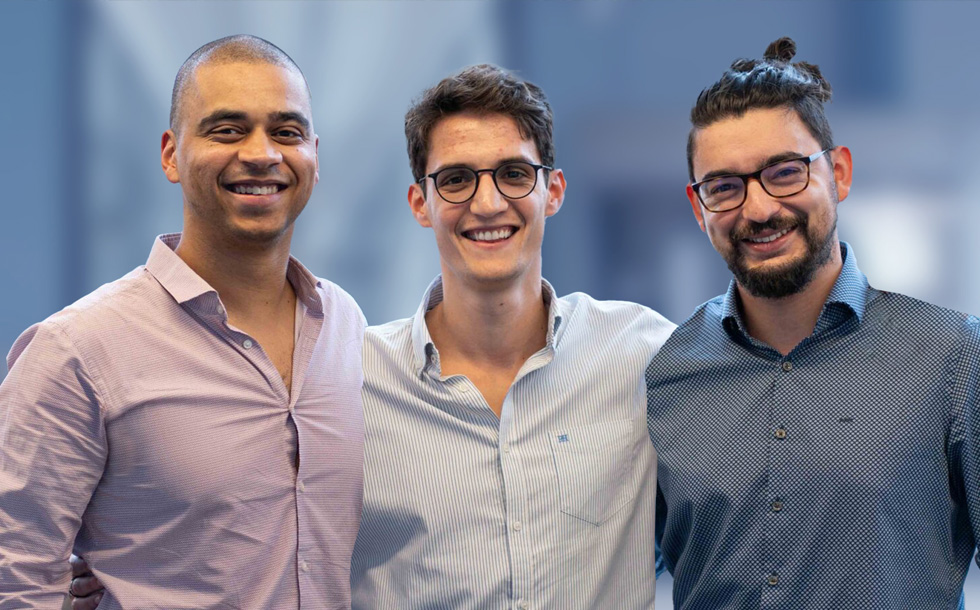
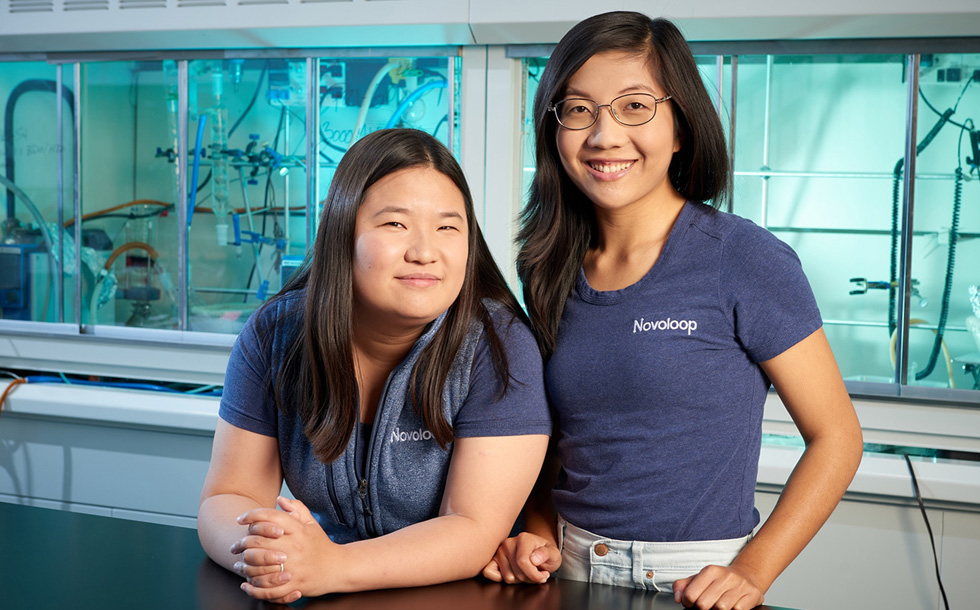
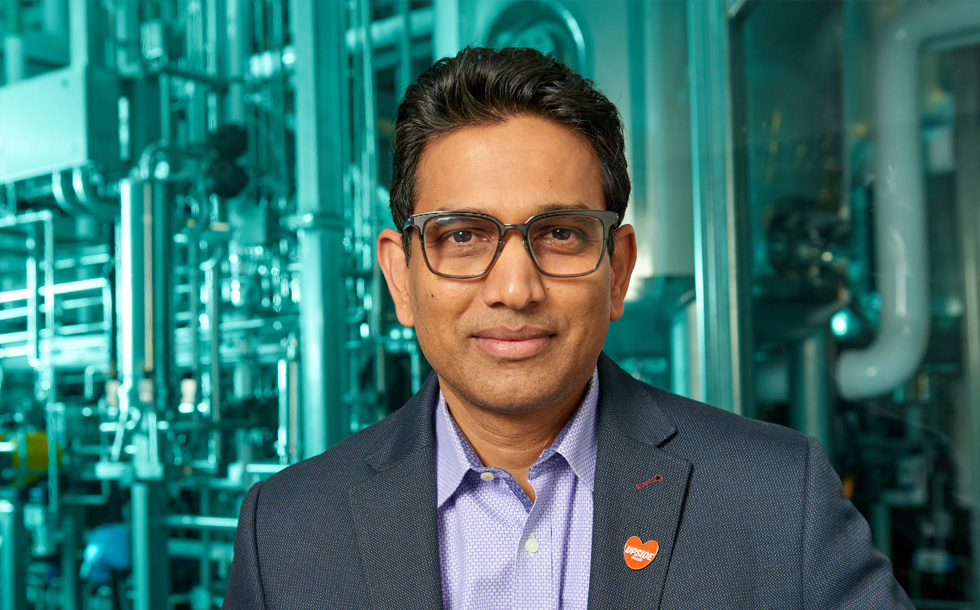
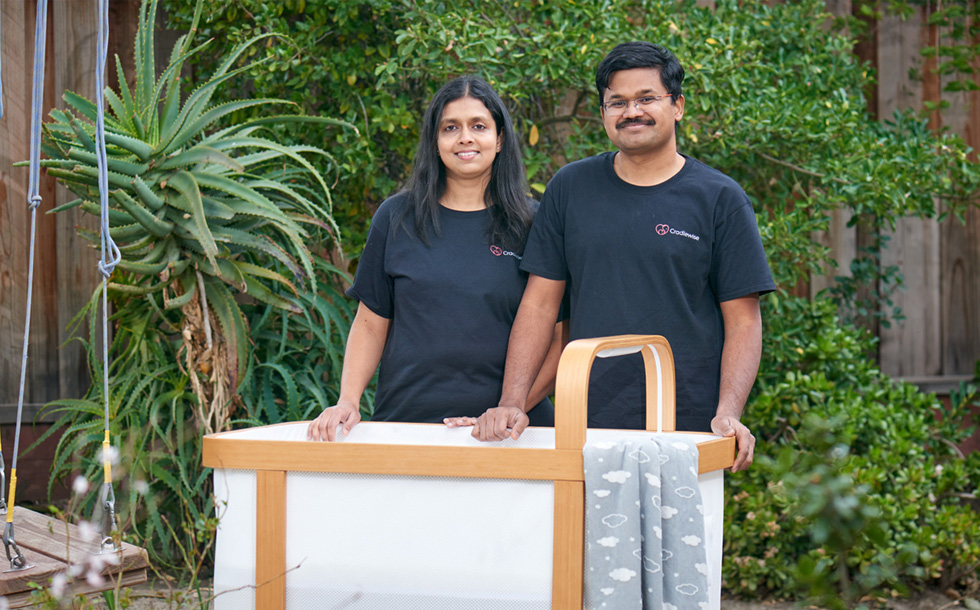
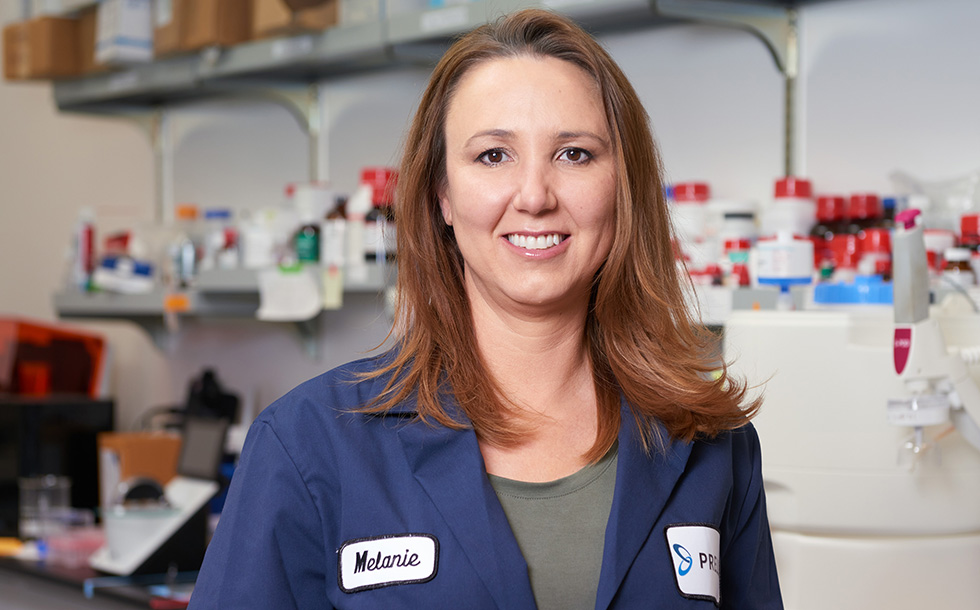
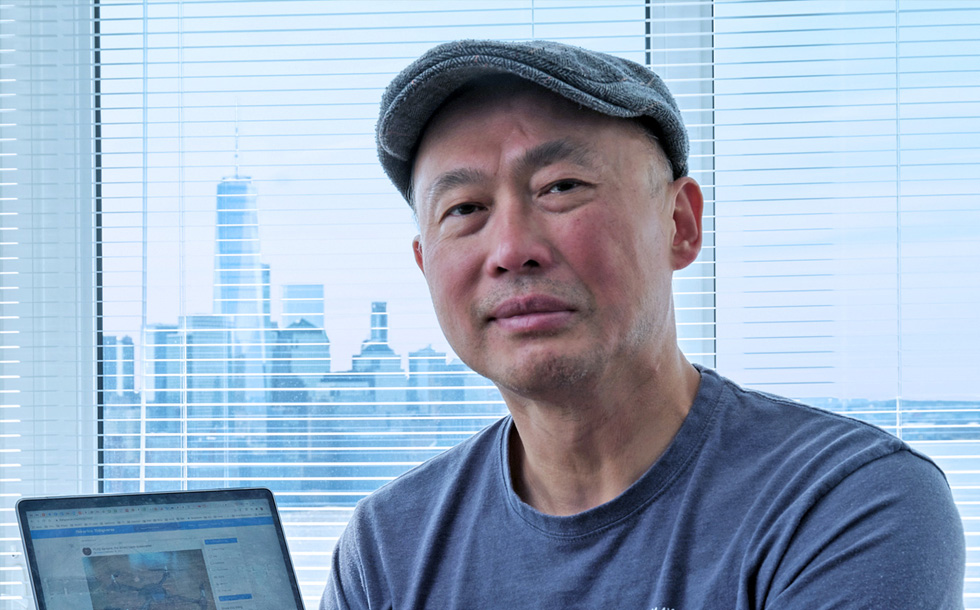
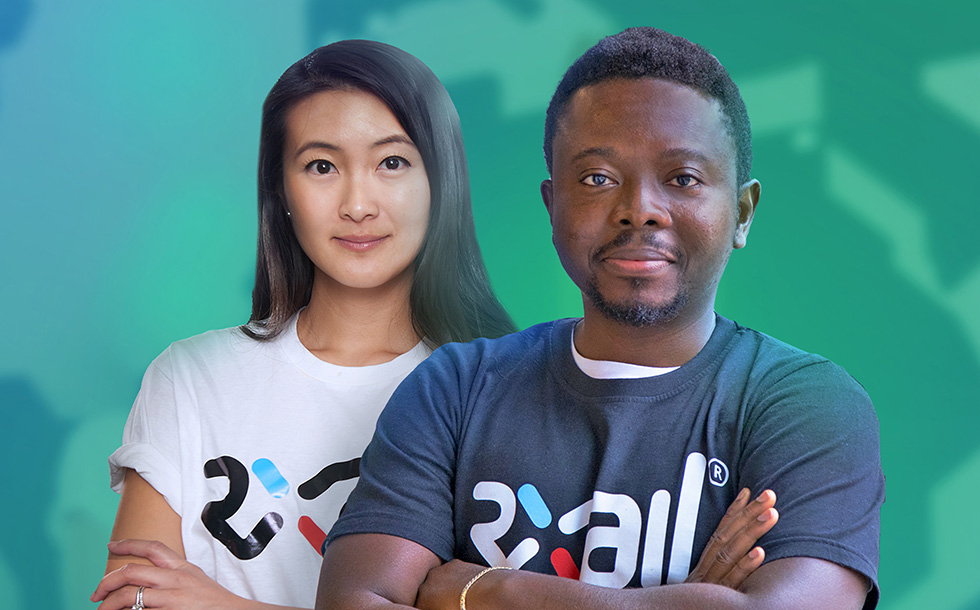
Hear what Duncan Turner (SOSV HAX General Partner), Susan Schofer (SOSV HAX Partner & Chief Science Officer), Pae W (SOSV SF General Partner), Parikshit Sharma (SOSV SF Partner) have to say. They break down why Physical AI is much bigger than robotics, the importance of a closed loop, why the tech is having a moment now, and more.
Check out the full video recording and transcript below.
Transcript lightly cleaned for readability:
Duncan: All right, Pae decided to change the order. So if you’re trying to figure out who’s who, you just have to mirror the slide there.
Thanks, everyone, for coming to this session. My name is Duncan. I’m a general partner at SOSV. I’m joined by some of the rest of the SOSV team. Do you want to quickly introduce yourselves?
Parikshit: Thanks. I’m Parikshit, and I’m one of the partners at the firm here in the San Francisco office. Happy to be here.
Susan: Hi, I’m Susan Schoefer. I’m a partner on the SOSV HAX team and also chief science officer for HAX.
Pae: Hi, and I’m Pae Wu. I’m one of the general partners at SOSV.
Duncan: Okay, so this session is actually going to be a little bit of a free-for-all. We’ve had some very interesting conversations between us around this topic of what is physical AI. I want to give a bit of background about the fund. We’ve been around for a long time, 30 years of history, but for 12 years specifically we’ve been investing in the physical world. If you can imagine, 12 years ago we were going out to LPs and saying, “Hey, you should invest in companies that are doing things that are not behind a screen but away from a screen.” Not doing SaaS, but doing things like robotics, investing in food and agriculture, investing in a whole range of different non-topical areas at the time. A lot of people thought we were crazy, but it worked out pretty well. Some of those first robotics companies we invested in, let’s say 10 years ago, are just about to IPO, and it’s a very exciting time to be in this space. We’re a pre-seed investor. We invest in about 60 new companies per year, and we have a huge amount of experience investing in these kinds of physical-asset technology companies.
We also have an enormous infrastructure to support that: about 85,000 square feet of labs. We’ve got chemical labs, robotics labs, BSL labs, everything that a startup needs to help them grow up the TRL ladder. When the phrase “physical AI” started getting bandied around, about two or three years ago, I personally got very excited, as somebody who’s invested in a lot of robotics companies. I was like, “Wow, this is our moment. Finally, everybody’s going to be looking at robotics.” And then I had a very sobering conversation with Pae about the fact that, actually, no, physical AI is a lot more than that. That’s really the topic of this discussion today. It’s going to be a discussion between us around how diverse this goes outside of robotics.
We’ve got some questions. There is no moderator, but I do have the clicker, so I can decide when to move on from a particular topic. We’ll have 10 minutes for audience questions at the end, so if you do have a burning question, please just raise your hand and we’ll get to you.
Okay, so the first question is: what is physical AI, anyway?
Pae: Well, as Duncan very eloquently put it, the idea around physical AI really is pulling technology out of the screen, off of our phones, out of our laptops, and actually bringing it into the physical world. What that looks like at various places in our portfolio are things like what Duncan very presciently invested in 10 years ago in the robotics domain, working in real environments, whether it’s out in the field or in warehouses or in retail, and bringing that intelligence into interactions with the real world.
In other domains, what we’re seeing is the use of AI to orchestrate and wrangle really complex data that is being produced in complex processes, like in new manufacturing platforms, for example. These are the types of systems that we invest in that are manufacturing chemicals or other types of novel products. These new manufacturing paradigms are generating massive data sets, and those data sets are powering a way for us to close the loop in a way that wasn’t really possible, I’d say, 10 or 15 years ago. Duncan made reference to the IoT era and how that was a kind of unidirectional information channel. Now, with the application of AI, we can close that loop and bring much greater control into more complex systems.
Duncan: Yeah, I’m reminded of being on this stage probably 12 years ago, and people were asking us what is IoT? And we were like, well, it’s just the internet but everywhere. Physical AI is that in many ways, but with a key difference. IoT was more of a one-directional data stream from sensors into a server, and it was a novel way to interact with information for the first time. But physical AI creates this bidirectional highway of data, which is incredibly exciting for a whole range of different reasons that we’ll get into in a second.
I think another thing that changed is that robots have gotten outside of cages. In the ’60s they were kind of locked behind a cage. They were blind. They were strong, but you wouldn’t really interact with them. These days you can interact with them everywhere, on the streets. That’s starting to bring a whole load of sensing problems and compute problems, which we’re finding are good opportunities to invest in. But it is so much bigger than robotics. Tell us, perhaps — Pae or Susan?
Susan: Well, on the molecules side, I would say it can be things like AI for materials discovery, which encompasses a lot of the points here. Lab automation to really accelerate that. A whole library of different inputs, and then outputs that are showing us what these materials can be. There’s a physical element to really testing those and creating a closed loop so that we can accelerate material discovery, and ultimately also scaling. So taking that data and being able to translate it as you scale those processes, because it’s not just about discovering a new composition of matter, but about actually being able to bring that out into the physical world. And really being able to feed into that and loop with machine learning and artificial intelligence to accelerate the compositions that we explore in the spaces that we look at.
Parikshit: Yeah. And I think something that’s really only possible now is this extreme co-design of a software-native tech stack with real-world systems and legacy industry. One of the areas I’m really excited about is legacy industries, like agriculture. For the first time we can build systems of action, not just another drone sensing input that tells a farmer what they already know, which is that there’s been a drought. We can now breed crops rapidly. We have a portfolio company called Avalo that goes from weather data to crop design, seed design, to rapid breeding, and then also agronomy in the farm, and does it as a loop. So there is a system of action that is actually empowering a farmer on the ground and making a material impact on the unit economics.
Earlier we only had systems of record. We could only document data. But I think closing the loop, like Pae was saying, between what you learn and how you act, this is the time. And I think that’s pushing physical AI beyond even robotics in structured factory environments into legacy industry, which really couldn’t ingest this much innovation back in the day.
Pae: I actually wanted to double up on something that Susan brought up, which I think is a really important point and a big part of why I’m excited about this AI-for-the-physical-world period that we’re in. It’s the challenge of taking new discoveries and actually scaling them. The connection between novelty and ubiquity is this very difficult scaling process that creates a lot of the friction and time loss that comes into play with a lot of new technologies that I’m sure everybody in this room has interacted with through their lives.
One example of a company in our portfolio that I think really effectively uses AI throughout their process is a company called Capra Biosciences. What they have fundamentally is a new bioreactor. They’ve developed a novel type of bioreactor technology, and one of the advantages of this technology is its modularity. Because they have sensorized the system, and because scaling for them involves scaling out by adding modules as opposed to scaling up by volume, each production unit is also their development unit. When they’re bringing new compounds into the reactor, once they’ve optimized for their development unit, all they need to do to scale is add modules. The quantity of the data, the multimodality of the data that they’re pulling from these systems is all feeding back, all the way to them doing genetic engineering of an organism at the very beginning. And that plays out to yield quality, and some of the downstream processing that they have to do. This truly wasn’t possible even five years ago because of the sheer volume of data and the heterogeneity of that data. That’s one of the real advantages that they’re bringing in, using both state-of-the-art LLMs as well as physics-informed models and other types of science-based models.
Duncan: I spend a lot of my time thinking about manufacturing. It’s an area where I actually spent years living in China, in a manufacturing plant, and it’s informed a lot of the way I think about opportunities. Where I get excited is where I see the US wanting to homegrow manufacturing again, to bring up the manufacturing base here in the US. That’s a very, very difficult thing to do if you don’t have a skilled workforce. This is another area where physical AI, the ability to adapt and control machines to create products that are not necessarily 100,000 of one thing but maybe 10,000 of one and 20,000 of another, is a huge opportunity. It’s a just-in-time manufacturing philosophy.
We’ve got a company in our portfolio called Unspun, who are actually based here, who create custom-shaped apparel, and they do that by going straight from yarn to finished garment. Rather than having to weave a bunch of denim, cut it out, sew it to size, and then ship it from a country that has lower labor costs, you can just do the whole thing in one automated process here in the US. I think that’s a great example of where you’re going to get immediate interest in physical AI within the US. You can also look at it within the high-tech manufacturing sector. We’ll talk a bit about semiconductor fabrication in a second, but just for commodities, and beating out some of the lower-labor-cost countries, the ability to do on-demand manufacturing enabled by physical AI is going to be super important over the next couple of years.
Okay, so we’ve got a bit of background about what it is. It didn’t get too theoretical, which is great. The next one is really: why now? Why is it happening now? I think most of us understand that GPU access for training is driving enormous change in our industry. Everyone here is from the tech industry, so we get that one. But there are some other parts of the physical AI space that are really becoming enablers and are truly important to acknowledge. One is ubiquitous hardware. I’m going to talk about robots because I’m still in the robot camp. Jetson as a GPU for robotics is really an enabler for a whole range of possibilities, being able to do deterministic compute at the edge. That was just very, very difficult to manage from a compute perspective five years ago. We’ve also got Chinese companies that have come up with incredible low-cost lidars. We’ve got haptics, which are starting to get embedded into robots that otherwise just were not able to sense the physical world in the way that we can now. So those are some of the reasons. Do you want to talk about some of the other things you’re seeing in your portfolio?
Parikshit: Yeah. Something we’re seeing is that there’s going to be a great opportunity space ahead of us for verification. As the cost of generation goes down, generating tokens, the value of verifying it goes up. We finally have the tools to do verification at scale and to have discovery loops that then become development loops, and do it in an automated fashion. I think the tailwinds from automation of software and vibe coding, we’re already seeing people deploy them in mission-critical industries. [Name unclear] is a great example of how they could do it for drones and just go away with the cost-plus model, because they have such a rapid loop.
In our portfolio we have a company called Logos, which is using mathematical autoformalization and creating libraries of stochastic calculus to train these cutting-edge frontier models, and post-train them, so that every chain of thought from an AI thinking or reasoning model can be verified. There’s one-to-one proof that reasoning will happen the way you promise. That wouldn’t have been possible just three years ago, unless we had a Cursor moment and a DeepSeek moment and such a great AI infrastructure buildup. So we are now able to verify the real world and close that gap between simulated output and real-world output faster than ever. That’s something I’m really excited about.
Susan: Another area that we’re looking at a lot recently at HAX is actually plasma physics, and I think it’s an exciting time there. We recently started a partnership with Princeton Plasma Physics Lab, PPPL, to build out the HAX Plasma Forge and they have 75 years of experience building knowledge and know-how about plasma. Of course, when everyone thinks of plasma, they think of fusion reactors, and that’s been largely their focus for many years. But there are actually many applications of plasma across semiconductor fabrication. It’s a very important technology there for making the advanced chips that we need, which ultimately power the infrastructure behind physical AI.
A very exciting thing recently is that plasma physics, and the ability to control plasma and how it interacts, has gone from what used to be a very Edisonian, trial-and-error approach to one where we now have computational capabilities to control that plasma. That’s a number of factors. One is just our ability to do faster compute, and the other is our deep understanding, which has evolved to the point where we can do meaningful simulations of that plasma and predict its behavior, and that allows us to do much more controllable things.
We have a couple of companies that we’re investors in in that space. One is able to use very unique technology to control plasma very specifically, thus enabling things like high-aspect-ratio etch, which is really a holy grail in terms of getting the compute infrastructure that you need. Another company that’s building world models is a company called Zenithon that we’ve recently invested in, Zenithon AI. They’re building world models specifically on plasma, with applications both in fusion and in low-temperature plasma applications in the semiconductor fabrication space. Having that model allows us to do experiments much more quickly and save time and cost on experiments. The first step is simulating and really understanding where there are promising areas to look at, then taking those promising areas and doing the experiments focused in the area where we know there’s going to be some success, and then you take that learning and loop it back to continue to improve your simulation. So AI is the driver, and it is the enabler, in that case.
Parikshit: Actually, can I make one more point? On the “why now,” we do live in a world with supply shocks, extreme weather, stressed and aging populations, and fragility of trade. I think extreme productivity is going to be the only way out. Physical AI is an input, but the output, or the promise, has to be that we need to be productive for 8 billion people. That’s the only way out of the mess that we find ourselves in. So I would say that’s another pull on the “why now” question that we must not forget.
Pae: So I think we’ll just move on to this next portion. As you can hear, we view AI for the physical world as a very all-encompassing technology that is playing out at a disturbingly fast pace right now. In our firm, the way we look at it is two sides of a coin. One side is really around how we power this AI, and that comes down to a few pillars. It’s compute capacity, and then the energy that drives that. There’s also the fuel for all of this, which is not fossil fuel but data, the bits that are going to create the brains behind all of this physical AI. And then we are sitting at a moment where our communications capabilities have reached a point where I could not have imagined this as a child. So it is a very exciting time.
When we look at these four domains that are driving the powering of AI, we are seeing huge opportunities. I think Susan already alluded to advances in compute and the semiconductor industry. We invest heavily in new energy generation and new forms of energy, as well as bringing new types of efficiencies to legacy energy generation. And then of course we have many, many companies that are building proprietary data sets, which I think we believe is the key to winning in this era, when LLM wrappers and things like that are becoming more or less commodities. The real value drivers are going to be in building out these proprietary, unique data sets that are going to drive a moat and give your company some kind of clear, durable advantage in the marketplace.
Duncan: Yeah, this is an area we’ve gotten very excited about, particularly on the compute side. If you think about all of the excitement around data centers and all the money that’s gone into data centers, that’s been mostly driving LLMs. That’s been driving training. We look at this physical AI movement as a completely different challenge. It’s an energy challenge, because suddenly you’ve got batteries powering things at the edge versus gas, or battery-backed data centers. So you’ve got different density requirements on the energy. But more importantly, you’ve got a compute stack with a completely different need from your traditional GPU.
We’ve been focused for the past eight or nine months on a new area for me: wafer fabrication equipment, semiconductor production equipment, which is really looking at a couple of different areas. One was what Susan mentioned, which is how you get a logic chip to do more with less power. The second is how you look at advanced packaging solutions that enable you to get more energy in and more heat out quickly from something at the edge. When you think about the requirements for the data processing and the resultant interaction with the world from some of these intelligent machines, we’ll call them, not robots, it becomes a compute problem.
I look at a lot of the humanoid stuff that’s happening at the moment and I’m like, “Wow, that looks impressive, but is there actually enough foundational technology there to power what we’re going to need these types of robots to do in the future? Or are they just going to die from being out of battery within a couple of hours? Are they actually going to be able to sense the world in the way that we need them to, versus just being reinforcement-learned to do exciting dancing tricks?” That’s where we’ve been spending a lot of our time: where we can invest in some of this infrastructure for the physical AI world, where we’re going to be doing a lot more compute at the edge and a lot more inference. That also goes to communications. We’ve been investing in companies that are creating their own chiplets that will enable models to be placed at a 5G or 6G base station, versus having high latency going to a data center. These are going to be really important enablers, and areas that I think are super exciting for people to invest in and for founders to be working in.
Then the second area for us is: what are the technologies that are going to be powered by physical AI? These sit in sectors and technologies, really. We’ve got robotics, which crosses everything, but then other areas that are going to be equally important. You mentioned agrifood, but you didn’t mention scientific discovery, which is another area I think you’ve been looking at, right?
Pae: Yeah. Yeah. So, we’re on this company for years. We share a lot of investments. On the discovery side, we are looking a lot at how advances in automation and robotics can be applied to workflows in the lab. A lot of that is part of powering what Susan was talking about on the discovery piece, as well as, like I was saying, helping to make more efficient the process of taking discoveries and developing them into something that can become scalable.
One example of a company that we’ve invested in that’s looking at the discovery and the lab piece of this is a company called Ampliment. They’re based here in San Francisco, and the founders were the scientific leadership team at a biotech company here in the Bay Area. This is essentially the tool that they, as senior leadership, wished they had had when they were building out their team of scientists who were doing a lot of bench-based work and a lot of discovery work. By and large, these are junior and mid-level scientists who need a lot of guidance. Y’all may or may not have heard of this in the bio world, but there’s this concept of people having “magic hands.” As a physics person, it sounds like nonsense to me, but the reality is that some people, for whatever reason, have magic hands. Experiments always work when they do them. And then there are other people who follow the exact same protocol, the exact same recipe to a T, and the stuff just doesn’t work. That has been a weird thing that has stymied discovery for all too long.
So what Ampliment is trying to do is bring physical AI into the lab workflows, essentially as a copilot, a support tool for the junior scientists. In part to help them make sure that they’re staying on top of the protocol properly, and in part to collect the data as they go through the protocols, to start deriving insights from where there may be deviations in the protocol, or where the protocol is not actually doing what they intended. All of this goes back to, one, helping with productivity, and two, building out data sets so that we can maybe get more intelligence into a process that has heretofore been a bit on the artisanal side.
Susan: I’m just going to add to that point. In my PhD lab, we called that the “law of initial optimization.” That is, you do an experiment once, it works great, and you can never repeat it, right? I think the automation, the ability to collect quality data, is a game-changer for taking R&D, making it much more efficient and cost-effective, and turning that into impact that can be translated into the real world.
Pae: Susan, the law of initial optimization was the name of my entire postdoc.
Susan: I think my PhD adviser coined the term, perhaps.
Parikshit: I just want to double-click on the point that Pae made around what’s artisanal and the magic hands. Similarly, there’s always the foreman who knows their factory floor the best, and there’s an immense amount of tribal knowledge. Every engineer debugs their code in an environment differently. So this is, I think, another exciting thing. We’ve finally brought down the cost of discovery and development to a point where we can capture a lot of this tribal and artisanal knowledge.
We invested in a company recently in the semiconductor space called Minnagam that takes standard protocols like ultra-wideband, Bluetooth, PCI Express, which are standardized on the face of it, but when you have to implement them on your chip and make them robust enough for the real world, they fail, and it’s a lengthy debugging process every time, just making tiny tweaks. So I think there are also a lot of boring and repetitive tasks, more muscles than brains, where you can now have an AI just watch, and steer and guide discovery in the right direction. We’re excited about that. I think many companies will come out of that.
Duncan: All right. So then we’ve got two more questions. One is around the short-term winners versus the longer-term ones. I’m going to define short term as the next five years. What is going to be successful in the physical AI space?
Susan: I think what is going to be successful in the short term are things that are very specifically focused. We’re not at a point necessarily where we can take these models or these systems and completely generalize them. The question often comes up: is it better to be vertically focused, or is it better to be a platform, horizontally focused? I think in the short term the winners are going to be the ones that have found the right vertical point to enter.
I can think of one example in terms of sensing. We’ve invested in a couple of companies that are making new diamond materials, diamond substrates that can do really specific quantum sensing. That’s hypersensitive sensors able to figure out motion from very far away, or for GPS-denied types of areas. The companies that have found a very specific use case and are able to develop these new materials that correlate to these spaces, those are the ones that I believe will win, because they’ve found a very specific use case. Once they’ve proven that in a couple of different applications, the opportunity opens up to be more horizontal and to really be a platform technology across many things. But right now we’re not yet at a point where we can just generalize before we get very specific and establish that product-market fit.
Pae: I guess I’d look at this two ways. If we’re talking really short term, I think the opportunities are in serving the industry, the underlying infrastructure for all of this tailwind. We’ve alluded to this a bit already: technologies that are bringing new energy to data centers, technologies that are bringing more efficiency into those operations. And technologies that, I’d say, have to be able to be rapidly adopted into that infrastructure. My own personal bias is that I come from a semiconductor background, and this is a new era of novel semiconductors getting an opportunity to be tried out for really valuable new applications. But the reality is that getting new materials into that whole value chain, into the supply chain, is a very long qualifying process, and therefore I think those will have a much longer timeline. But if you’re already operating in, obviously, silicon, or in the compound semis that are already being deployed for photonics and things like that, those are areas where, if you are bringing a real value-creating wedge to the infrastructure folks, I think your odds of adoption are faster.
Parikshit: And the infrastructure piece in this domain is interesting because, unlike other types of legacy infrastructure, for example energy generation, where those types of assets are amortized over 30 to 50 years, in the AI infra space we’re seeing 3-to-5-year amortization schedules. That is driving much more rapid adoption and, obviously, turnover. But that’s a great opportunity.
One last point I’ll make is that when we think of compute, we think of energy for compute as a very big bottleneck. What we’re seeing with the data center buildout is that you now need a social license to operate. That’s a term my co-worker Alex, who’s not here, continuously reminds us of. For a data center to be accepted by a community, you need to solve unburned methane issues, water issues. Just three years ago, TechCrunch used to have a climate tech booth. I think there’s a lot of great technology and assets that were developed during that supercycle that can now finally have their day.
Pae and I share a portfolio company called Super Cool Earth that is building precision precipitation. It’s cloud seeding in really high temperatures, where you cannot do it with silver iodide, and they use naturally occurring proteins to do so. They’re going to help utilities have control over water, so that we can have better ways to manage water as a resource. Similarly, we have a portfolio company called Endaris, and it’s a catalytic converter that takes all the unburnt methane from the lean-burn engines that data centers are using behind the grid and makes sure that methane is converted to CO2. It’s the lowest-cost catalytic conversion, and it’s one step forward to give communities and data centers a bit more harmony as we do this amazing industrial buildout. So that’s another piece where debottlenecking is going to be critical.
Duncan: If I just look at all of those, there are opportunities in all of them, but I would say the highest bar, honestly, is in integration for robotics. If you look at how much excitement there is around humanoids doing these incredible things, the transition from that to a sustainable business model that actually is profitable and makes sense is, I think, a long journey for a lot of those companies. Whereas I look at compute, sensing, and actuation, maybe a little bit — I mean, how many actuator companies do you need? — but definitely compute and sensing, there’s a whole load of excitement driven by a lot of humanoids in that space. That’s the kind of opportunity I see at the moment. You can invest in a load of different companies that are enabling that future.
Sure, there’s going to be a bit of a crash. The Gartner hype curve is definitely going to happen: all this excitement goes down to the point where the plateau of productivity starts, as we get all of that infrastructure in place. That’s the bit I’m personally excited about. I love the models for R&D. I think those ones will do very well, as they’re speeding up the R&D of some of this exciting technology. I think the real-world models still have a little bit of underlying infrastructure to enable them.
Okay. And then the last one. What are the adoption factors? And by the way, can I just see a show of hands: how many people have a question? Okay, we’ve got a load. Let’s quickly run through this and then we’ll get to the questions. So, what are the adoption factors? From a market perspective, why are people actually going to adopt this stuff, apart from the fact that it sounds cool?
Pae: Well, I think Parikshit already brought up one really great point, around value generation and productivity. Where I’m seeing some really exciting opportunity is in new value. Not simply creating more efficiencies in what we already know today, but opening up new domains. We’re already seeing this, for example, in some of the discovery work we talked about: the opportunity to create new insights across many domains of science and turn those into new, unexpected technologies is where I’m getting very excited. The reason we’re benefiting so much from Nvidia’s scale-out over the last 15 years is that they had invested so heavily in scientific discovery and in the adoption of their tools by scientists. With the advent of all of these really accessible AI tools, we are seeing the R&D community supercharged, and I think that brings us some really great and exciting new opportunities on that front.
Susan: I think one huge thing that drives adoption is just general tailwinds. One big unifying theme that we’re seeing is all around resilience. Whether that means energy security, which is either new ways of production or storage or ways to have more localized energy sources, or nearshoring manufacturing, which is a driving force. That means we need to not just think about replicating technologies that are practiced in China here in the US, but actually think about leapfrogging. That drives us to think about new technologies, whether it’s automation or really thinking about processes in new ways that allow us to do them here where we otherwise couldn’t.
One of our companies, called Nascent Materials, is making LFP batteries. That’s a next-generation lithium-ion battery, lithium iron phosphate. It’s technology that’s developed and manufactured in China. Today the products of that are not really exported, and the technology is very protected. They’re able to produce basically an equivalent-quality product, but in a way that’s cost-effective for the US, much more feedstock-flexible, which allows us to do it in more localized ways. That’s a way they can win in a different geography, in a different paradigm than was previously happening.
Duncan: I would agree with that. We were at Climate Week a couple of weeks ago, and it was interesting to see that the green premium has been completely replaced by the resiliency premium. I think that’s something that’s going to last, which is really good for tech companies. Anyway, we have time for some questions. A few people raised their hands. Do you want to come up here to the microphone, or is there a microphone being handed around? There’s a mic. There’s a guy on the left. Go ahead. You were first. Come up to the microphones right there.
Audience: How do you guys think about the talent pipeline for both founders and employees for these companies? Is it still traditional academia, and how are we going to transition from pure software to physical AI?
Duncan: That is a great question. Do you want to talk about the plasma stuff, and then…
Pae: Yeah. Certainly, I think it’s going to be a combination. There is a lot of highly technical talent who can bring important insights out of a deep scientific expertise. With some of these technologies, for example our cloud seeding company, when you’re talking about a technology that’s going to be operating at such a large scale in the environment, we’re not looking to move fast and break things, because these are people’s lives we’re talking about. So bringing in real expertise, people who have a deep understanding, for example, of the physics you’re interacting with, is important. I don’t think AI is a panacea that can replace that understanding. What it can do is augment it. In fact, what we’re seeing with a lot of the models now is the incorporation of those insights: scientifically informed models that are helping advance things into the physical domain.
Duncan: That’s a really good question. It’s something we spend a lot of our time thinking about as early-stage investors. There are a couple of technologies where there’s an easy way to answer that, like enhanced geothermal. The US has probably one of the best bases of oil and gas drilling experts, who can apply that same knowledge to clean firm power generation, which is freaking awesome. Where we’re falling short is things like fusion, or even fission, where we don’t have enough scientists and engineers in that area if that trajectory starts to kick off like we hope it does. That is a challenge.
As part of the PPPL partnership that we have, there are so many P’s because it’s a public-private partnership, what we’re trying to focus on is explaining to academics: “Hey, look, the stuff that you’ve been doing, that 20 years ago would have meant you were just in research, now, because AI is enabling so much more discovery, you can turn that research into something that’s market-facing in five years, not 30 years.” That’s a storytelling exercise for us, and something that’s starting to get quite a lot of momentum. People are turning away from doing a postdoc or spending their lives in academia and starting to go towards a startup area, and the money is there to do it. So it’s a great time for people who have been in those areas.
Audience: We participated two times in Match Cup, and it was very fruitful for our side. I want to first of all thank you for your events. My question is for the physical AI startups’ products: what are your product-market-fit thresholds for your decisions? What are the true signals for your side?
Duncan: Your question is: what is our threshold for understanding whether you’ve established product-market fit?
Audience: Yeah.
Susan: I think for us it’s really a question of how we make investment decisions. At SOSV we invest in very early-stage companies, and that can look like a number of things. We’re obviously very technical and also have a lot of industry experience on our team, so I think that helps us a lot. Ultimately what we’re looking for is to understand the technology. Sometimes it’s at the napkin, pre-proof-of-concept stage, or it’s at a proof-of-concept stage where you have data. What we’re really looking for is to understand: does this technology work? Is there an opportunity for an asymmetric bet, where if it works it will be a huge winner? A lot of that comes down to understanding the market and where it’s really going to fit in. Obviously those things are very difficult, and we need to do a lot of deep digging to get those insights, but it is based on our understanding of where there truly are gaps in the market and where we think this technology can have an outsized impact on a problem that we know is a real problem in the industry.
Duncan: Again, this is a great question. How does a pre-seed investor, investing before the technology has gone anywhere near the real world, assess product-market fit? Interestingly, for us, when we’re looking at teams, and also when we’ve got teams that we’ve invested in, we separate out their marketing and sales skills from their product-market fit. The reason we do that is that it’s actually very easy for a good salesperson to go and sell a business on a need that they have with a solution that is not actually going to fit that need. You can get a load of LOIs. You can even get orders. But that doesn’t translate to product-market fit. Product-market fit technically happens once you’ve got repeat orders.
But in order for a pre-seed investor to evaluate that, we have to get insight into the company and, as Susan mentioned, not just the company but the industry, and insight into the technology, and figure out: is this really going to make sense from a unit-economic perspective? So we’re deep into techno-economic analysis with the companies, and then just figuring out how close they’re going to map to that TEA.
Parikshit: Yeah. I think this is a very important question, because over and over again the bitter lesson of building in the real world, or innovating in the real world, is that you can do everything right, but if you have to build a megafactory to hit small, commodity pricing, and build a megafactory before you have repeat orders, you’re in this weird valley of death where you need to raise billions before you have revenue, but you need to show revenue to raise billions. That problem of balancing your revenue curve with the capital expenditure requirement is something we think about, and that’s why our platform exists: so that an emerging company doesn’t always have to build a megafactory. They can rent existing infrastructure or partner. OpenAI is a great example, where it wasn’t a venture fund, it was the balance sheet of Microsoft. Waymo is another great example: it’s the balance sheet of Alphabet. So I think we, as a firm, are also set up to help facilitate corporate interconnects for deep tech, so that it’s capital-efficient.
Duncan: Yeah. All right, the pressure is on for the final question. Can you make sure you speak loudly into the microphone? It’s difficult for us to hear.
Audience: Can you guys hear me?
Duncan: Yeah.
Audience: Awesome. Thanks for the panel discussion. We are seeing a lot of teams showing great benchmark results, but when they move to production, it’s not meeting that expectation. Based on what you have seen in your portfolio companies, what infrastructure do you think is still missing to continuously improve those deployed systems?
Duncan: Hang on, I don’t think I quite got the last bit. Could you repeat the last bit?
Audience: What infrastructure do you think is still missing in the companies that are deploying in production, so they can continuously deliver the value that they promised in the lab?
Duncan: Right. Okay. So, how does the lab translate into production value for a lot of these companies? That is the challenge with the humanoid industry at the moment, honestly: how do you translate all of that excitement into something that is of value in the real world? Within the manufacturing sector, this one is actually very easy for us to monitor. We look at a range of different data points within a particular machine or investment that will help us understand the productivity gains of that particular technology, and then we can map those back, or forward, from where the technology is at the moment.
I think one of the challenges, particularly for hard tech, is that not every investor is a hard-tech investor. There are a lot of generalist investors now coming into the hard-tech sector who are used to a much quicker R&D cycle with software than what you get with hardware. So I think it’s on the whole industry to acknowledge that there are big rewards here, but you can’t expect the level of iteration and progress that a software company was able to do. However, as somebody who’s been investing in hardware for a very, very long time, that R&D cycle has compressed dramatically from where it was. It was really bad earlier. It has gotten much faster and it will continue to get faster. You just need to make sure that the company has investors who understand some of those processes and understand that an unforeseen mistake, something that was not planned, could cost you six months. That’s one of the bigger challenges that I think some of the companies have in the space. Anyone else want to give some examples here?
Susan: I’ll just make one comment, which is that this is where there’s a lot of discipline in knowing what it is your customer actually wants. Just because you’re in the lab doesn’t mean you can’t talk to customers. It doesn’t mean you can’t go and understand what they do care about, and also figure out what they actually don’t care about. An example of this is one of our portfolio companies that’s doing a calibration-free cryogenic sensor. It’s a thermometer, but it just works at extremely low temperatures. These guys are as academic as it comes, but what they’ve been doing is talking to every single quantum company out there and understanding what specific performance requirements are necessary. It’s not just measuring the temperature. There are a lot of systems-level integration issues that you get with shielding, etc. They’re understanding what they have to design for right now just to get their first prototypes into the hands of the customer, and what they can punt on for the time being. They can plan for it, they can do some work in the background, but really it’s about prioritizing the most important metric for your customer today. Time and again we see academic groups who focus on the wrong thing, because it’s the interesting academic question and not the actual metric that matters to the customer.
Pae: Just one final addition from me: that’s why it’s important to iterate quickly, right? That’s kind of why we exist as investors and are unique. We’re really working with our companies to help speed up that iteration cycle in the physical world. Of course it’s about customer discovery, and getting out of the lab to talk to people to understand that. Customers will tell you what they want, but what you really need to do is actually build it, show it to them, share it with them, have them test it, and then iterate quickly. I’ve seen time and time again that you have a specification set on paper as to what this thing needs to do, and once you bring it to the customer, a lot of other unspoken needs come up: “Oh, well, we didn’t mention it also has to do this,” or “We didn’t mention it has to work like this.” So you really need to be engaging with your customers throughout that cycle, but also iterating quickly in the physical world so that they can touch it, feel it, play with it, and test it in their own environment, because that’s where the learning really happens.
Audience: We think there’s an infrastructure gap that actually exists between the customer requirements and what these labs and AI teams are trying to do, because that’s where they can go really faster. So I’m just curious, have you seen any infrastructure gap in that?
Duncan: I think we’re actually out of time, so we may have to take your question offline. Yeah. Thanks, everyone. Thank you.